

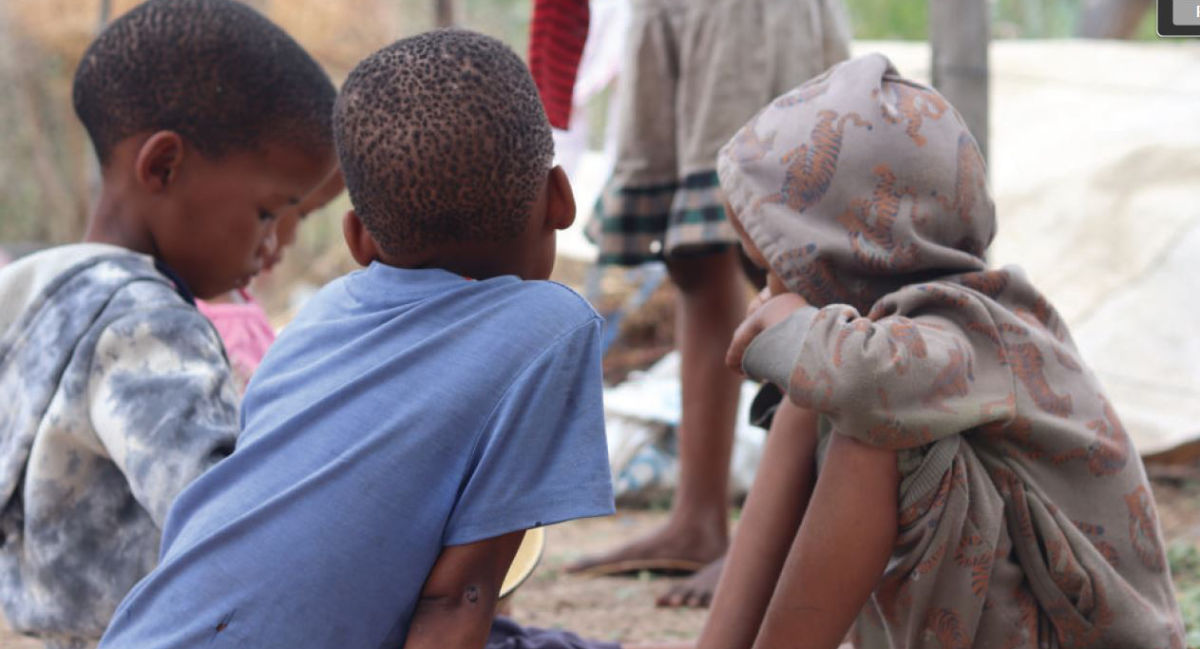
Children in Botswana are subjected to the worst forms of child labour, including sexual exploitation, cattle herding and domestic work. In 2022, the Addressing Child Labour in Botswana project reached out to the Ghanzi and Tsabong districts, where child labour according to a survey that was carried out, was actually a concern, especially at farms and cattle ranches.
Through the Ministry of Labour, we were granted access to the farms to be able to carry out mass mobilization campaigns, where we mobilised communities and screened for possible child labor cases. Through our project’s efforts, it had emerged that a significant number of children involved in child labour were school dropout, particularly those recorded in school registers as absconded.
The project also revealed that most of the suspected cases of child labour occur on a part time basis as children are hired temporarily when they are free. In addition, the general trend seemed to be that children aged 8 – 12 years are commonly found taking care of small stock while those aged 13 – 17 years usually are hired to herd cattle and generally taking care of them, also moulding bricks and mending fences at the farms.
As we continue mobilizing these communities and working towards ending child labour, we empower the families and communities to contribute to solutions to this child labour problem and ensure that laws meant to protect children in Botswana are enforced by the government. However, it should be noted that not all work done by children should be classified as child labour that is to be targeted for elimination.
The participation of children or adolescents above the minimum age for admission to employment in work that does not affect their health and personal development or interfere with their schooling, is generally regarded as being something positive.
This includes activities such as assisting in a family business or earning pocket money outside school hours and during school holidays.
Some of the results from the project:
- 2496 parents educated on child labour prevention
- 3,527 people participated in campaigns and public awareness raising on child labour issues
- 3046 children reached with child labour prevention messages in schools