Our Health Programs begin with the people and not with disease; through the implementation of our projects we respond to how people live their lives. Positive health outcomes rely on people living well and having the ambition and energy to build and maintain good health in their communities.
Amongst others, our health programs respond to HIV and AIDS, Non-Communicable Diseases (NCDs) and other infectious diseases. We work very closely with the communities we serve, ensuring that they are the leaders of all the initiatives in the community. The power to identify concerns, come up with solutions through decision making lies entirely with the community. This approach places them at the front and centre of all activities being implemented in their communities.
Our health programs support the adoption of advanced health practices by equipping communities with the adequate skills and appropriate knowledge so that they can take control of their own health and contribute to saving the lives of other people in the community. Communities work in collaboration with local health facilities in addressing health issues. Amongst others, the communities work with doctors, nurses, matrons and the District AIDS Coordinators in our health programs.
We work to complement SDG 3; Ensure healthy lives and promote well-being for all at all ages.

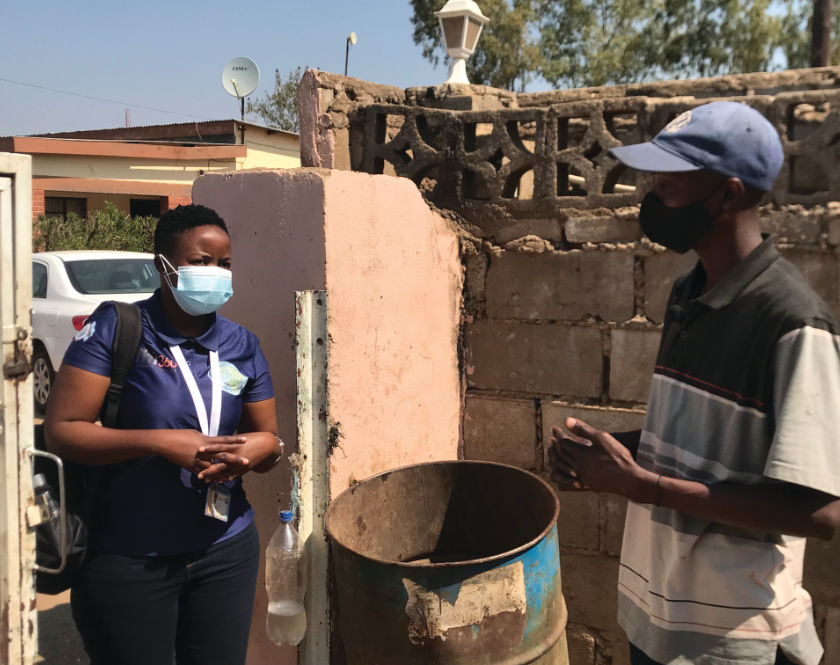
Total Control of the Epidemic (TCE) is our HIV and AIDS programme which builds on the understanding that ‘Only the people can liberate themselves from AIDS the epidemic’. This programme supports sustained HIV epidemic control and improved health outcomes through strengthened primary health care and social service platforms.
TCE provides HIV testing to people who are yet to know their HIV status. Knowing one’s HIV status, TCE enables people to make informed decisions about HIV prevention options, including medical services to prevent children from getting infected with HIV, promote safe sex practices, mobilise for voluntary medical male circumcision and, pre-exposure and post-exposure prophylaxis.
Our HIV Testing Services have shown that targeted community-based HIV testing approaches are effective in locating people who are not aware of their HIV status.
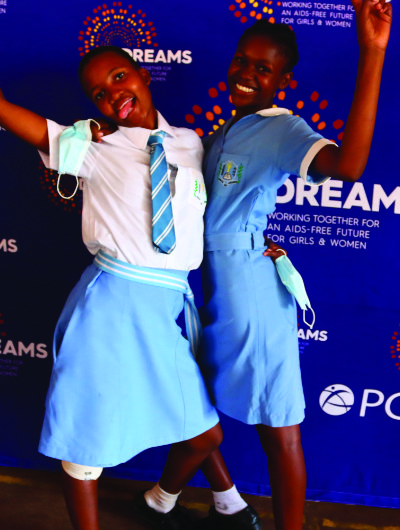
We implemented the Determined, Resilient, Empowered, AIDS free, Mentored and Safe (DREAMS), an HIV prevention comprehensive package. We engaged, mostly, the vulnerable adolescent girls and young women with skills training, scholarships and empowerment initiatives for effective resilience.
HOPE Humana coordinates Civil Society Organizations across the country in response to the prevention of HIV, Non-Communicable Diseases, mental health and provision of human rights services at the workplaces. As he coordination body, our roles is to ensure that the CSOs fully understand the National Strategic Framework and the NCDs strategy priorities.
Our project team supports the CSOs in efficient implementation by being part of their plenary meetings, attending field activities as well as monitoring and evaluating the project activities on a regular basis. We also ensure accountability and transparency by sharing reports with the donor.
HOPE Francistown encourages communities to take control of their health by equipping them with knowledge on diseases; how to prevent infection as well as how to manage disease; emphasizing PREVENTION | CARE | SUPPORT.
Through the support of local leadership, stakeholders and the community at large, the project screened people for Tuberculosis, tested people for HIV and made referals where necessary.

Results from our TCE programmes 2023:
- 58 345 people reached
- 7 653 people tested for HIV
- 4 657 Condoms distributed
UNAIDS 2025 targets state that, by 2025:
- 95% of people with HIV will know their status
- 95% of people with HIV who know their status will be on treatment
- 95% of people with HIV on treatment will be virally suppressed.

DREAMS is an international movement aimed at reducing the rate of HIV among Adolescent Girls and Young Women (AGYWs). The initiative is designed for girls and young women who aspire to reach their full potential in life and achieve their goals, simultaneously promoting sisterhood, fun, growth and sharing of knowledge and resources while empowering an AIDS free generation of Adolescent Girls and Young Women (AGYW).
Through the DREAMS core package, we aim to empower adolescent girls and young women and reduce risk through youth-friendly reproductive health care and social asset building; mobilize communities for change with school and community-based HIV and Violence prevention; strengthen families with social protection and parent/caregiver programs. protection and parent/caregiver programs.
We have positioned ourselves such that we deliver components of a comprehensive package of HIV prevention services through DREAMS. Our services are packaged by primary, secondary and contextual activities, where services in the primary package intend to meet the immediate needs of the AGYWs while services in the secondary and contextual packages address other critical vulnerabilities associated with HIV risk.
Such services include HIV screening, testing and counselling; school and community- based HIV and violence prevention programs; comprehensive economic strengthening; post violence care for survivors of GBV; Pre-Exposure Prophylaxis; Condom promotion and provision for AGYWs and their partners, Improved access to youth friendly sexual and reproductive health care and a full range of contraceptive methods; Parenting/caregiver programs and Community Mobilization and norms change programs.
3, 780 adolescent girls and young women reached with DREAMS primary package.

Total Control of the Epidemic (TCE) utilizes a targeted approach (HIV self-testing and index partner testing)
in identifying undetected HIV cases among high-risk populations.
As part of community index testing, TCE provides index testing to sexual partners of: newly identified People Living with HIV (PLHIVs), HIV retrospective clients not yet initiated on treatment, high viral load clients and treatment interrupters through lists received from health facilities and sexual contacts to community index clients.
HIV self-testing (HIVST) is a process in which a client collects his or her own specimen (oral fluid or blood) and then performs an HIV test and interprets the result, often in a private setting. Just like other approaches to HIV testing, HIVST remains voluntary, not coercive or mandatory to clients.
A reactive (positive) self-test result always requires further testing and confirmation from a trained tester starting from the beginning of a validated national testing algorithm. Self-Testing is a good strategy to reach men and Adolescent Girls and Young Women where facility testing and community index testing cannot be provided.
Through our HIV Testing Services, we distributed HIV self-test kits and assisted in HIV self-testing to individuals screened and those eligible for testing, and linked all individuals who tested HIV positive and enrolled them on ART treatment. We also offered Pre-Exposure Prophylaxis (PrEP) as one of the HIV prevention strategies that uses antiretroviral drugs to protect HIV negative girls from getting infected.
Condom use is a critical component of a comprehensive and sustainable approach to the prevention of unintended pregnancies and sexually transmitted diseases including HIV. We continue to provide effective condom education and distribution to the general population to promote correct-consistent-condom use and to clear all the myths and misconceptions to mitigate the risk of HIV infection. Condom demonstration and distribution have been carried-out during door-to-door mobilization, individuals in the community, and homes. Our teams established condom outlets in the districts of implementation to bring services closer to the community
Some Resupts from the project:
• 948 HIV positive people traced in community and linked to treatment
• 3, 571 people enrolled on community care

A safe space refers to a formal or informal platform where Adolescent Girls and Young Women (AGYW) feel
physically and emotionally safe; where there is absence of trauma, stress, violence, judgement or abuse.
Safe spaces continue to be instrumental in the delivery of social asset building for Adolescent Girls and
Young Women (AGYW). Safe spaces give AGYWs a platform to meet with their peers supported their
mentor.
DREAMS Mentors create ‘safe spaces’ where AGYWs can build their supportive social networks and learn about HIV and violence prevention. Discussions at safe spaces range from issues surrounding relationships, personal values, sexual reproductive health, violence, abuse, clinical services for the girl child, current trends and other issues beyond. Through safe spaces, AGYWs acquire survival skills that help them resist peer pressure, refrain from inter-generational sexual relationships, how to address Gender Based Violence,
prevention from HIV infection and life skills in general.
During the year 2022, we continued to serve our DREAMS girls in safe spaces. Through this platform, we ensured that our girls socialise, have access to social support, have access to supportive social networks, acquire various skills especially from mentors that are brought in to talk to the girls during motivational sessions, access safe and non-stigmatizing services such as for violence against women, legal services, health services and psychological services.
• 237 out of school safe spaces
• 5,451 members belonging to safe spaces
• 23 in schools safe spaces with 1,647 members
Since the outbreak of the Covid 19 virus, the effects have left different parts of the globe to this day still trying to recover. In Botswana, the year 2022 was not as harsh as 2021 and 2020, as many measures to try and curb the virus were taken into place, especially vaccination, which has since played a vital role in stabilizing the rate of infection.
During 2022, Humana People to people Botswana continued implementing all project activities with Covid 19 protocols being observed. Even though Covid 19 restrictions had been lifted, the country still ensured that prevention and control strategies were highly considered; including public education through the use of mass media and other forms of educations; advised self-quarantine for suspected cases; and social distancing where the public is advised to take measures to reduce contact in malls, shops, work, gyms, places of worship etc.
Through our project, Support for Covid 19 response, we implemented activities to support community efforts in vaccine roll out and infection prevention and control. We mobilized the communities and shared Covid 19 messages across the community via various meetings, stakeholder forums and workshops to ensure that people gain knowledge on prevention. Subsequently, the community responded and went for Covid 19 testing
• 9,322 people provided with messages related to COVID-19
• 17, 497 screened for COVID-19
• 2, 246 screened through contact tracing

During COVID-19, HPP Botswana established community-based programs such as Community Adherence and Retention Groups (CARGs), Community Medication Refills (CMR), and Male Safe Spaces (MSS) to ensure continuity of services for people living with HIV (PLHIV).

People directly reached

People received HIV/AIDS testing services

HIV positive people traced and linked to treatment

Condoms distributed

Screened for COVID-19
Adolescent girls reached with DREAMS primary package

Members belonging to safe spaces

Out of school safe spaces

Gender based violence (GBV)survivors identified

